
“There’s always room for a story that can transport people to another place.”
― J.K. Rowling
“I never realized how easily people could be trained to accept slavery.”
― Octavia E. Butler, Kindred
“I wonder how many people I’ve looked at all my life and never seen.”
― John Steinbeck, The Winter of Our Discontent
“People do blame you for the things they do to you.”
― Octavia E. Butler, Parable of the Talents
“And now that you don’t have to be perfect, you can be good.”
― John Steinbeck, East of Eden
“It’s better to teach people than to scare them, Lauren. If you scare them and nothing happens, they lose their fear, and you lose some of your authority with them. It’s harder to scare them a second time, harder to teach them, harder to win back their trust. Best to begin by teaching.”
― Octavia E. Butler, Parable of the Sower
“But the Hebrew word, the word timshel—‘Thou mayest’— that gives a choice. It might be the most important word in the world. That says the way is open. That throws it right back on a man. For if ‘Thou mayest’—it is also true that ‘Thou mayest not.”
― John Steinbeck, East of Eden
“And this I believe: that the free, exploring mind of the individual human is the most valuable thing in the world. And this I would fight for: the freedom of the mind to take any direction it wishes, undirected. And this I must fight against: any idea, religion, or government which limits or destroys the individual. This is what I am and what I am about.”
― John Steinbeck, East of Eden
“All war is a symptom of man’s failure as a thinking animal.”
― John Steinbeck
“Sometimes I wrote things because I couldn’t say them, couldn’t sort out my feelings about them, couldn’t keep them bottled inside me.”
― Octavia E. Butler, Kindred
“What she needs are stories.
Stories are a way to preserve one’s self. To be remembered. And to forget.
Stories come in so many forms: in charcoal, and in song, in paintings, poems, films. And books.
Books, she has found, are a way to live a thousand lives—or to find strength in a very long one.”
― V.E. Schwab, The Invisible Life of Addie LaRue
“I believe a strong woman may be stronger than a man, particularly if she happens to have love in her heart. I guess a loving woman is indestructible.”
― John Steinbeck, East of Eden
“Hello babies. Welcome to Earth. It’s hot in the summer and cold in the winter. It’s round and wet and crowded. On the outside, babies, you’ve got a hundred years here. There’s only one rule that I know of, babies-“God damn it, you’ve got to be kind.”
― Kurt Vonnegut
“A purpose of human life, no matter who is controlling it, is to love whoever is around to be loved.”
― Kurt Vonnegut, The Sirens of Titan
“Dear future generations: Please accept our apologies. We were rolling drunk on petroleum.”
― Kurt Vonnegut
“All great and precious things are lonely.”
― John Steinbeck, East of Eden
“Your teachers
Are all around you.
All that you perceive,
All that you experience,
All that is given to you
or taken from you,
All that you love or hate,
need or fear
Will teach you–
If you will learn.
God is your first
and your last teacher.
God is your harshest teacher:
subtle,
demanding.
Learn or die.”
― Octavia E. Butler, Parable of the Sower
“Change is freedom, change is life.
It’s always easier not to think for oneself. Find a nice safe hierarchy and settle in. Don’t make changes, don’t risk disapproval, don’t upset your syndics. It’s always easiest to let yourself be governed.
There’s a point, around age twenty, when you have to choose whether to be like everybody else the rest of your life, or to make a virtue of your peculiarities.
Those who build walls are their own prisoners. I’m going to go fulfil my proper function in the social organism. I’m going to go unbuild walls.”
― Ursula Le Guin, The Dispossessed: An Ambiguous Utopia
“To be is to do – Socrates
To do is to be – Sartre
Do Be Do Be Do – Sinatra”
― Kurt Vonnegut
“Choose your leaders
with wisdom and forethought.
To be led by a coward
is to be controlled
by all that the coward fears.
To be led by a fool
is to be led
by the opportunists
who control the fool.
To be led by a thief
is to offer up
your most precious treasures
to be stolen.
To be led by a liar
is to ask
to be told lies.
To be led by a tyrant
is to sell yourself
and those you love
into slavery.”
― Octavia E. Butler, Parable of the Talents
“Embrace diversity.
Unite—
Or be divided,
robbed,
ruled,
killed
By those who see you as prey.
Embrace diversity
Or be destroyed.”
― Octavia E. Butler, Parable of the Sower
“It was her habit to build up laughter out of inadequate materials.”
― John Steinbeck, The Grapes of Wrath
“Kindness eases change.
Love quiets fear.
And a sweet and powerful
Positive obsession
Blunts pain,
Diverts rage,
And engages each of us
In the greatest,
The most intense
Of our chosen struggles.”
― Octavia E. Butler, Parable of the Talents
“Cities controlled by big companies are old hat in science fiction. My grandmother left a whole bookcase of old science fiction novels. The company-city subgenre always seemed to star a hero who outsmarted, overthrew, or escaped “the company.” I’ve never seen one where the hero fought like hell to get taken in and underpaid by the company. In real life, that’s the way it will be. That’s the way it always is.”
― Octavia E. Butler, Parable of the Sower
“Create no images of God. Accept the images that God has provided. They are everywhere, in everything. God is Change— Seed to tree, tree to forest; Rain to river, river to sea; Grubs to bees, bees to swarm. From one, many; from many, one; Forever uniting, growing, dissolving— forever Changing. The universe is God’s self-portrait.”
― Octavia E. Butler, Parable of the Sower
“People who deny the existence of dragons are often eaten by dragons. From within.”
― Ursula K. Le Guin, The Wave in the Mind: Talks and Essays on the Writer, the Reader and the Imagination
“To survive,
Let the past
Teach you–
Past customs,
Struggles,
Leaders and thinkers.
Let
These
Help you.
Let them inspire you,
Warn you,
Give you strength.
But beware:
God is Change.
Past is past.
What was
Cannot
Come again.To survive,
know the past.
Let it touch you.
Then let
The past
Go.”
― Octavia E. Butler, Parable of the Talents
“A writer is a person who cares what words mean, what they say, how they say it. Writers know words are their way towards truth and freedom, and so they use them with care, with thought, with fear, with delight. By using words well they strengthen their souls. Story-tellers and poets spend their lives learning that skill and art of using words well. And their words make the souls of their readers stronger, brighter, deeper.”
― Ursula K. Le Guin
“Beware:
Ignorance
Protects itself.
Ignorance
Promotes suspicion.
Suspicion
Engenders fear.
Fear quails,
Irrational and blind,
Or fear looms,
Defiant and closed.
Blind, closed,
Suspicious, afraid,
Ignorance
Protects itself,
And protected,
Ignorance grows.”
― Octavia E. Butler, Parable of the Talents
“We read books to find out who we are. What other people, real or imaginary, do and think and feel… is an essential guide to our understanding of what we ourselves are and may become.”
― Ursula K. LeGuin
“The only thing that makes life possible is permanent, intolerable uncertainty: not knowing what comes next.”
― Ursula K. Le Guin, The Left Hand of Darkness
“Do you take pride in your hurt? Does it make you seem large and tragic? …Well, think about it. Maybe you’re playing a part on a great stage with only yourself as audience.”
― John Steinbeck, East of Eden
“There’s more beauty in truth, even if it is dreadful beauty.”
― John Steinbeck, East of Eden
“When a child first catches adults out — when it first walks into his grave little head that adults do not always have divine intelligence, that their judgments are not always wise, their thinking true, their sentences just — his world falls into panic desolation. The gods are fallen and all safety gone. And there is one sure thing about the fall of gods: they do not fall a little; they crash and shatter or sink deeply into green muck. It is a tedious job to build them up again; they never quite shine. And the child’s world is never quite whole again. It is an aching kind of growing.”
― John Steinbeck, East of Eden
“It has always seemed strange to me…The things we admire in men, kindness and generosity, openness, honesty, understanding and feeling, are the concomitants of failure in our system. And those traits we detest, sharpness, greed, acquisitiveness, meanness, egotism and self-interest, are the traits of success. And while men admire the quality of the first they love the produce of the second.”
― John Steinbeck, Cannery Row
“The child in each of us
Knows paradise.
Paradise is home.
Home as it was
Or home as it should have been.Paradise is one’s own place,
One’s own people,
One’s own world,
Knowing and known,
Perhaps even
Loving and loved.Yet every child
Is cast from paradise-
Into growth and new community,
Into vast, ongoing
Change.”
― Octavia E. Butler, Parable of the Sower
“To be alive at all is to have scars.”
― John Steinbeck, The Winter of Our Discontent
“When two people meet, each one is changed by the other so you’ve got two new people.”
― John Steinbeck
“I believe that there is one story in the world, and only one. . . . Humans are caught—in their lives, in their thoughts, in their hungers and ambitions, in their avarice and cruelty, and in their kindness and generosity too—in a net of good and evil. . . . There is no other story. A man, after he has brushed off the dust and chips of his life, will have left only the hard, clean questions: Was it good or was it evil? Have I done well—or ill?”
― John Steinbeck, East of Eden
“Try to understand men. If you understand each other you will be kind to each other. Knowing a man well never leads to hate and almost always leads to love.”
― John Steinbeck
“A kind of light spread out from her. And everything changed color. And the world opened out. And a day was good to awaken to. And there were no limits to anything. And the people of the world were good and handsome. And I was not afraid any more.”
― John Steinbeck, East of Eden
“But I have a new love for that glittering instrument, the human soul. It is a lovely and unique thing in the universe. It is always attacked and never destroyed – because ‘Thou mayest.”
― John Steinbeck, East of Eden
“I’m trying to speak–to write-the truth. I”m trying to be clear. I’m not interested in being fancy, or even original. Clarity and truth will be plenty, if I can only achieve them.”
― Octavia E. Butler, Parable of the Sower
“I have a huge and savage conscience that won’t let me get away with things.”
― Octavia E. Butler
“In order to rise
From its own ashes
A phoenix
First
Must
Burn.”
― Octavia Butler, Parable of the Talents
“There is no end
To what a living world
Will demand of you.”
― Octavia E. Butler, Parable of the Sower
“It seems to me that if you or I must choose between two courses of thought or action, we should remember our dying and try so to live that our death brings no pleasure to the world.”
― John Steinbeck
“Love doesn’t just sit there, like a stone, it has to be made, like bread; remade all the time, made new.”
― Ursula K. Le Guin, The Lathe of Heaven
“He was like me – a kindred spirit crazy enough to keep on trying.”
― Octavia Butler
“Anything that just costs money is cheap.”
― John Steinbeck
“All that you touch
You Change.All that you Change
Changes you.The only lasting truth
is Change.God
is Change.”
― Octavia E. Butler
“But I have a new love for that glittering instrument, the human soul. It is a lovely and unique thing in the universe. It is always attacked and never destroyed – because ‘Thou mayest.”
― John Steinbeck, East of Eden
“We have only one story. All novels, all poetry, are built on the neverending contest in ourselves of good and evil. And it occurs to me that evil must constantly respawn, while good, while virtue, is immortal. Vice has always a new fresh young face, while virtue is venerable as nothing else in the world is.”
― John Steinbeck, East of Eden
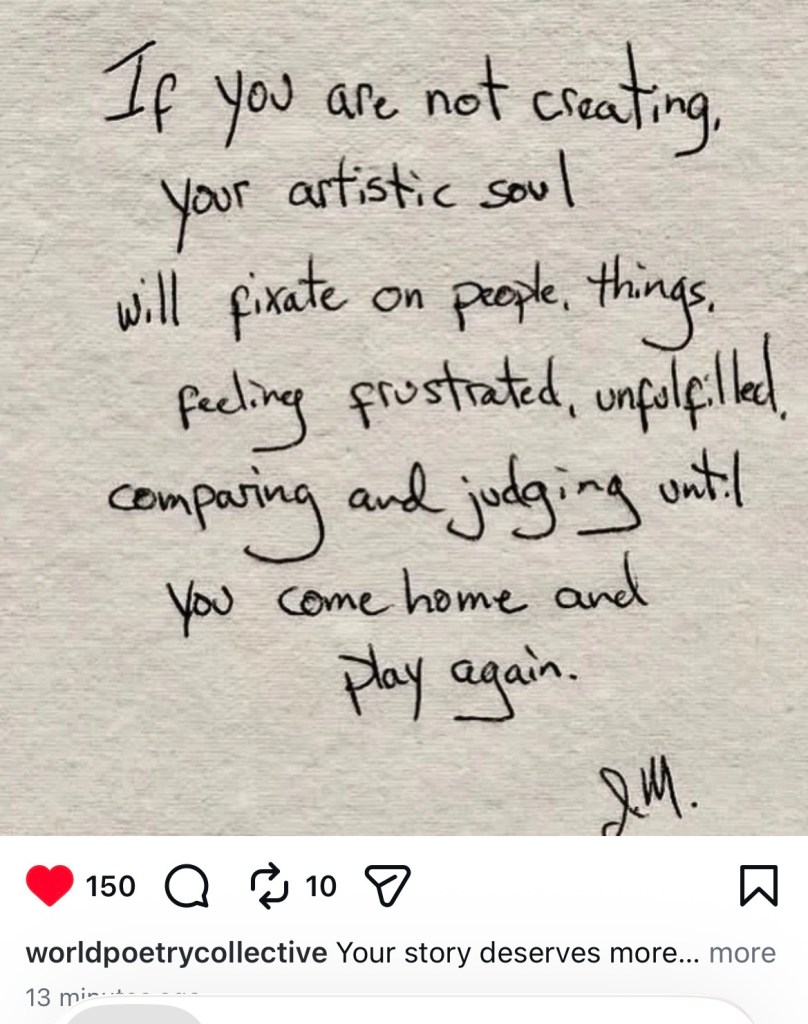
“If your daily life seems poor, do not blame it; blame yourself, tell yourself that you are not poet enough to call forth its riches; for to the creator there is no poverty and no poor indifferent place.”
― Rainer Maria Rilke, Letters to a Young Poet
“What is a Wanderess? Bound by no boundaries, contained by no countries, tamed by no time, she is the force of nature’s course.”
― Roman Payne, The Wanderess

